
Every week I see another founder announce they vibe-coded their SaaS product. Fast. Cheap. No engineers. Just prompts, momentum, and a working demo. Then someone like me raises a concern bad architecture, conflicting DB patterns, no one asking the questions that matter and the counter-argument arrives quickly:
But thinking models exist now. o1, o3, Claude with extended thinking they reason before they respond. They surface edge cases. They tell you what you don’t know.
- Outsourcing works when the delivery system is strong (ownership, QA gates, sprint rhythm, and governance).
- Picking the right engagement model (augmentation vs dedicated pod vs project) prevents most outsourcing failures.
It is a fair challenge. And it is exactly right up to a point.
That point is where the real argument begins.
Yes, Thinking Models Are Genuinely Different
Let us be precise. Thinking models o1, o3, Claude Sonnet 4.6 with extended thinking do not just complete your prompt. They reason through it. They consider alternatives. They catch logical gaps in your own specification before generating output.
This is meaningfully better than a raw prompt-and-ship tool. If you ask a thinking model to design a database schema, it will consider normalisation, query patterns, future migration paths. It will surface things a baseline model would silently get wrong.
That is real. That is valuable. Do not dismiss it. But here is the precise boundary of what it can do:
A thinking model reasons brilliantly within the scope of what you gave it. It cannot reason about what you forgot to include.
The thinking happens inside the context window. Your blind spots live outside it.
If you never mentioned that you expect 50,000 concurrent users, no amount of chain-of-thought reasoning will surface that requirement. If module 3 was built in a different session three weeks ago, the model reasoning about module 7 today has no memory of it. If your business logic has an edge case you have never encountered yet the model cannot invent knowledge it was not given. The unknown unknown is not a reasoning problem. It is a domain knowledge problem. And chain-of-thought does not fix a missing mental model.
What About Claude Code Re-Architecture?
This is where it gets more interesting and more honest.
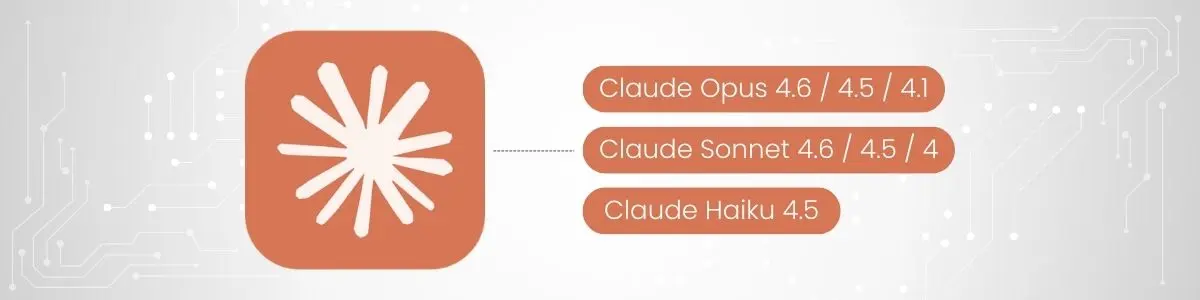
Claude Code with Sonnet 4.6 can re-architect a codebase without changing functional requirements. This is not theoretical. It can:
- Identify conflicting DB patterns and propose a unified approach
- Refactor over-engineered logic while preserving behaviour
- Restructure modules for proper separation of concerns
- Flag security gaps, missing indexes, N+1 query problems
- Rewrite entire layers while keeping API contracts identical
The reasoning depth is real. This is genuinely one of the most powerful capabilities in software development today.
But, and this is the condition that matters it needs a complete picture to reason well.
Feed it a partial codebase or a codebase that was never designed but accumulated across fifty disconnected sessions and it will produce something significantly better than what existed. But it is still reasoning about the artefact in front of it, not about the business intent behind it.
It cannot know the scaling assumptions that were never written down. It cannot know the integrations that were planned but not built yet. It cannot know that the founder mentally redesigned the data model three months ago but never updated the code to reflect it. This creates a precise implication that is worth sitting with:
To brief Claude Code well enough to re-architect your product correctly, you need to understand your product well enough to write a complete brief. Which means you need engineering judgement before the AI can help you fix the engineering judgement.
You still cannot escape the human in the loop. You have just moved them earlier in the process.
The Capability Map Precisely Where AI Helps and Where It Cannot
| Layer | What AI Can Do | What It Cannot Do |
| Thinking Models (o1, o3, Claude extended thinking) | Reason deeper on what you asked. Surface edge cases within the prompt. | Surface what you forgot to ask. Blind spots outside the context window. |
| Claude Code / Sonnet 4.6 Re-architecture | Restructure what it can see. Unify DB patterns, refactor layers, keep API contracts. | Reason about intent it was never given. Cannot know scaling assumptions never written down. |
| Vibe Coding (baseline) | Build fast from prompts. Validate ideas. Ship a working prototype. | Know your blind spots. Ask the questions you didn’t think to ask. |
The pattern is consistent across all three layers. The tool gets smarter. The dependency on human domain knowledge does not shrink.
It actually increases because now you need to brief the AI well enough to unlock its full capability. A bad brief to a smarter model produces a more confidently wrong output.

The Robotic Surgery Analogy Now With More Precision
Thinking models are a better robot. A more precise instrument. A surgeon using them will operate with more accuracy than before.
But the patient who picked up the scalpel is still the patient. A smarter scalpel does not make them a surgeon.
The question is never about the quality of the tool. It is always about who is holding the intent.
A thinking model in the hands of an experienced engineer is extraordinary. The engineer’s mental model provides the context the model needs to reason well. The gaps the engineer knows to flag get flagged. The questions they know to ask get asked.
A thinking model in the hands of a founder who has never shipped production software at scale is still operating without the mental model that unlocks the tool’s real capability.
So What Is the Right Move?
Use all of it. Aggressively.
Vibe code the concept. Use thinking models to stress-test your architecture before you build it. Use Claude Code to re-examine what you have built and propose better structure.
Then bring engineers in not as a cleanup crew, but as the people who can write the brief that unlocks what Claude Code can actually do for you. The people who will see the gaps in your context before you feed it to a model.
The engineers you bring in do not replace AI capability. They enable it fully.
Do not underestimate them. Do not under-brief them. Do not hand them a codebase and say it works, just build on top.
Give them the full picture. Let them tell you what the model cannot see. Then let the model help them fix it faster than any previous generation of engineers could.
That is the actually correct workflow. Not AI versus engineers. AI amplified by engineers who know how to aim it.
The tool gets smarter every week. The need for someone who knows what to ask it that does not get smaller. It gets more important.
Vibe coding is not a shortcut to a software business. It is a shortcut to a prototype and now, with thinking models and Claude Code, a faster path to a better-structured prototype.
But the foundation of a real product is still built by people who know what questions to ask.
Know the difference. Build accordingly.

Shekhar is the CEO of a 25-year software development agency specialising in Python, API integration, and legacy code rescue. If you are building a product and want an honest read on your current foundation.
Follow me – LinkedIn